Although Iran’s official flag remains allowed in the stands, the ban on the historic flag has revived old questions about the limits of separating sports from politics — and who gets to define the meaning of national symbols.
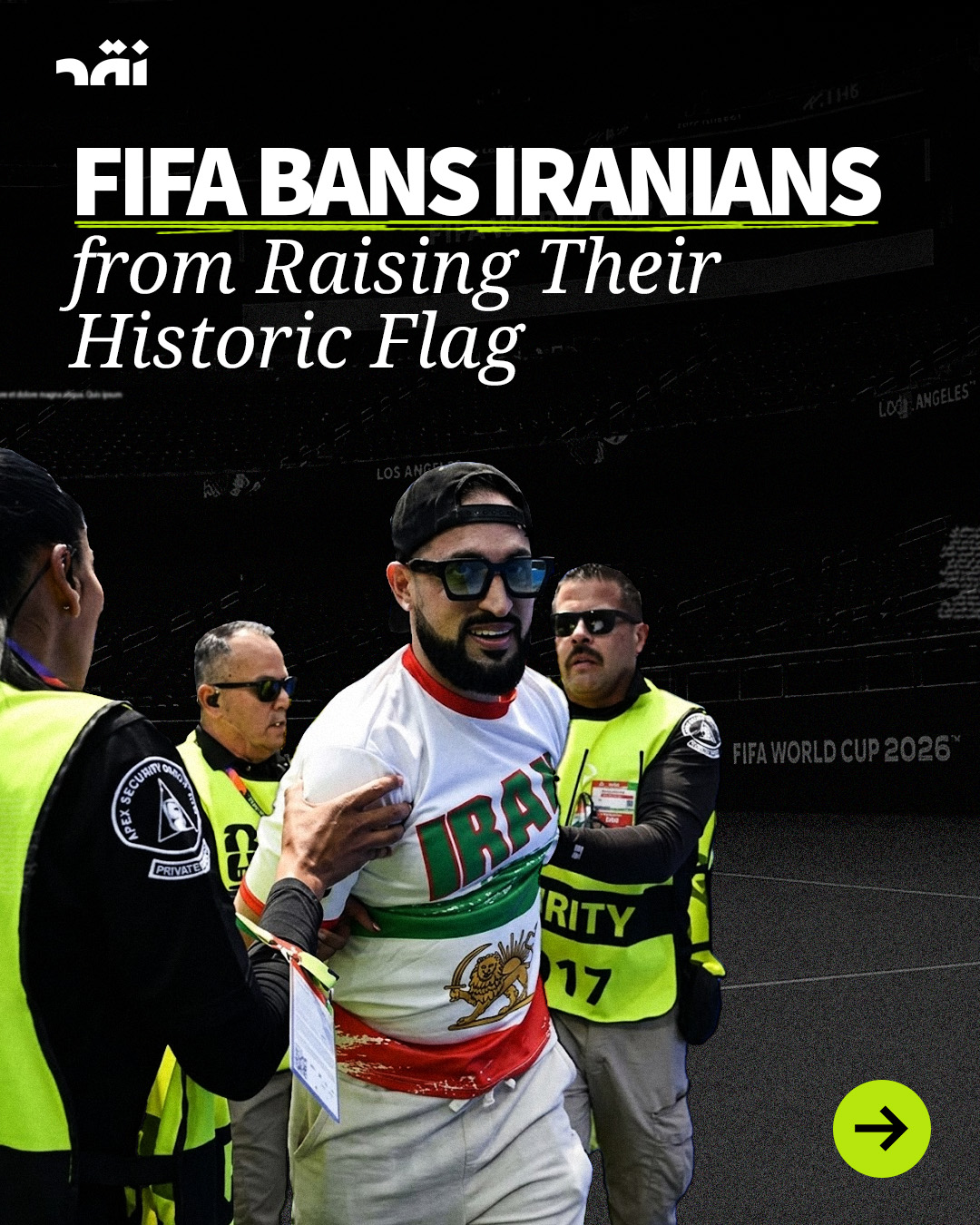
FIFA’s decision to ban Iranian fans from bringing the “Lion and Sun” flag into World Cup 2026 stadiums has sparked wide debate.
The banned flag is not the current flag of the Islamic Republic, but one of Iran’s oldest national symbols, used for centuries before the 1979 revolution. Today, however, it is widely used by opponents of the Iranian regime and by Iranian diaspora communities, leading FIFA to view it as a political symbol.
Since their creation, stadiums have never been just places to watch matches. They have become one of the few spaces where people express their identities, affiliations, and opinions — especially in societies where freedom of expression is restricted outside the stands.
Critics argue that restricting some symbols while allowing others opens the door to selective standards and raises a deeper question: is the World Cup truly for everyone, or only for some?
Between seeing the flag as a political symbol or as part of Iran’s historical memory, the debate continues over where politics ends and freedom of expression begins.