
More than a decade after one of the largest waves of displacement in the region’s history, the direction of movement across the Syrian border has begun to reverse.
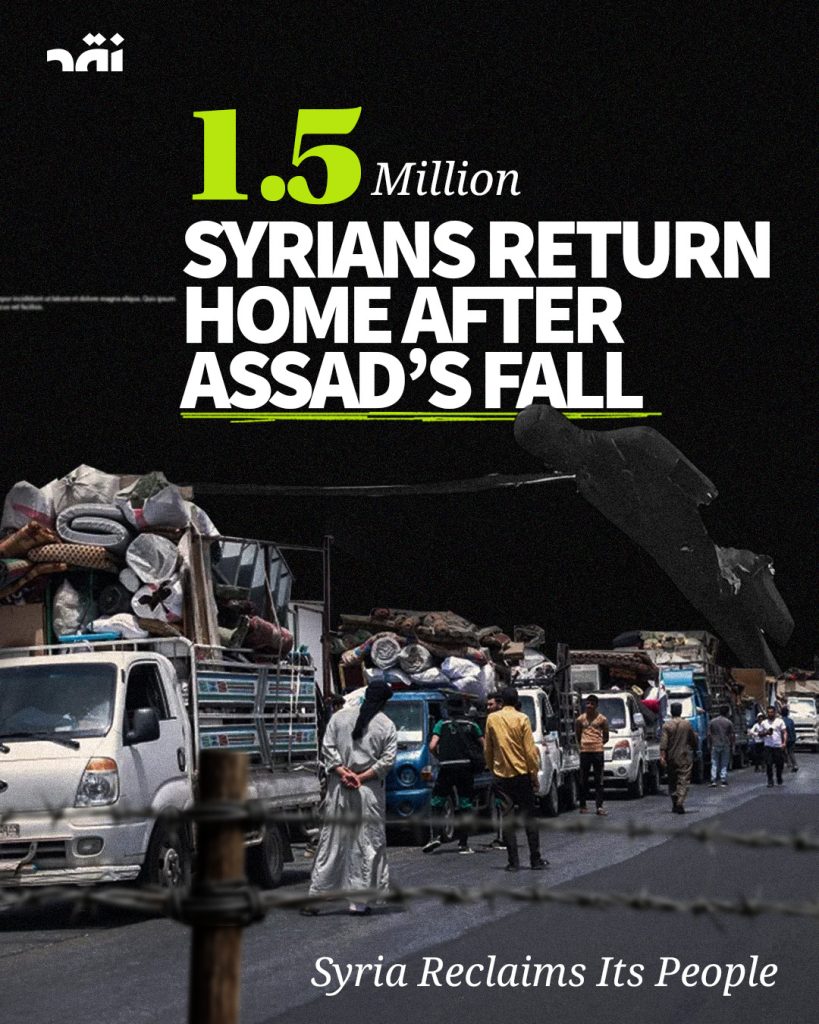
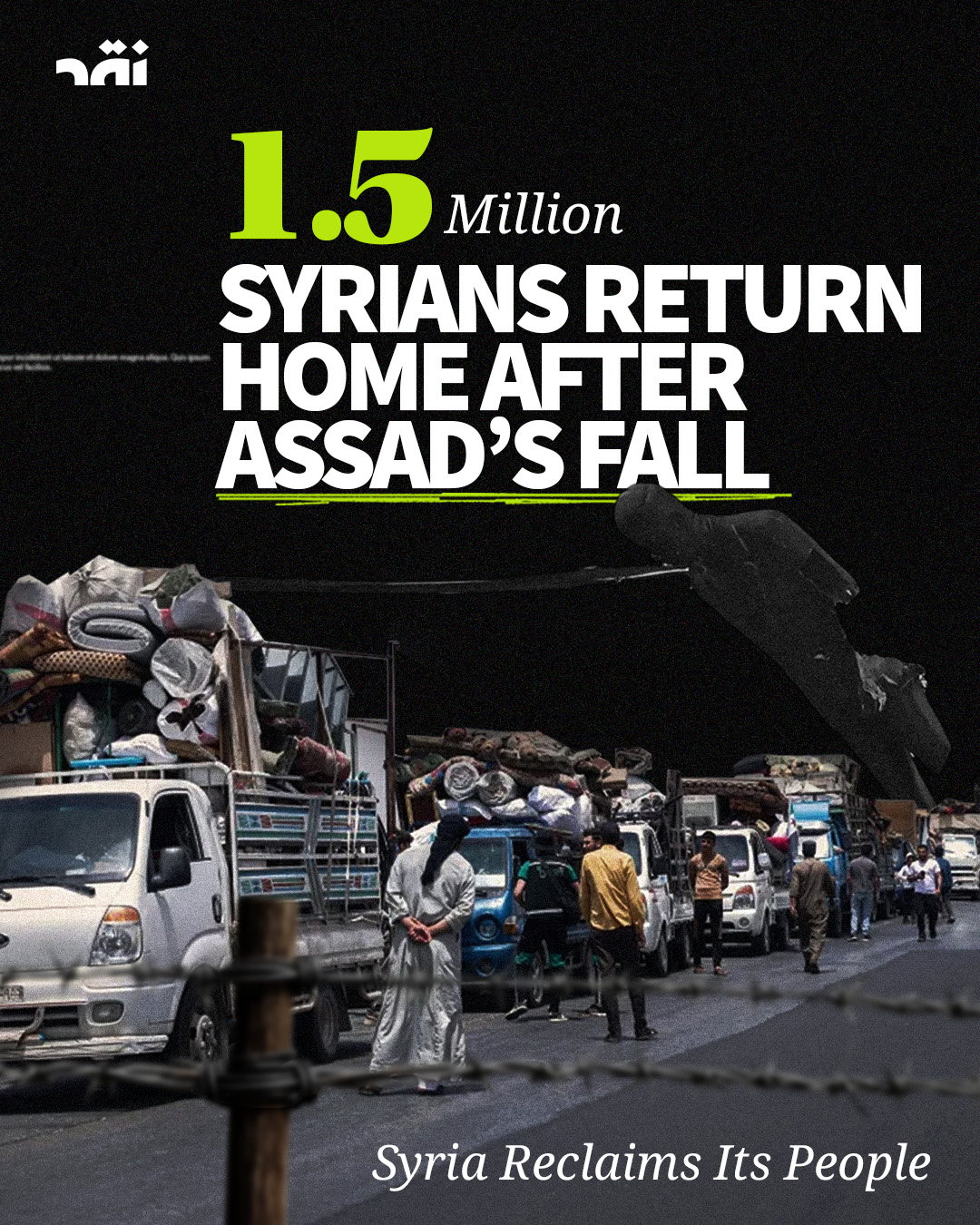
Since the fall of Bashar al-Assad’s regime, more than 1.5 million Syrians have returned to their country, including over 600,000 from Turkey, around 400,000 from Lebanon, and more than 160,000 from Jordan.
This return reflects the scale of hope Syrians are placing in the country’s new phase, as well as their desire to rebuild a normal life inside their homeland — one based on safety, stability, and the ability to live with dignity after years of fear, displacement, and loss.
Alongside this transformation, the new Syrian state is attempting to present itself as a different authority through a series of measures aimed at rebuilding state institutions and restoring both domestic and international trust. These efforts include restructuring the financial sector, attempts to revive the economy, rebuilding the Syrian army after years of war and exhaustion, and reopening files related to corruption and abuses committed by officers and officials of the former regime against Syrians.
The country is also witnessing judicial and security measures targeting prominent figures from the previous era, in what appears to be an effort to reinforce the image of a new phase built on accountability and the reconstruction of state institutions away from the ruling system that controlled for decades.
Despite the immense economic and security challenges still facing Syria, the return of such a large number of Syrians carries deep political and humanitarian significance. After years in which millions were forced to leave their homeland, many are now returning in the hope of building a state that can offer stability, dignity, and a real chance to reclaim life within their own country.