U.S. links Hezbollah back to Iran and sanctions its funding network
Like this post

21 Aug 2026
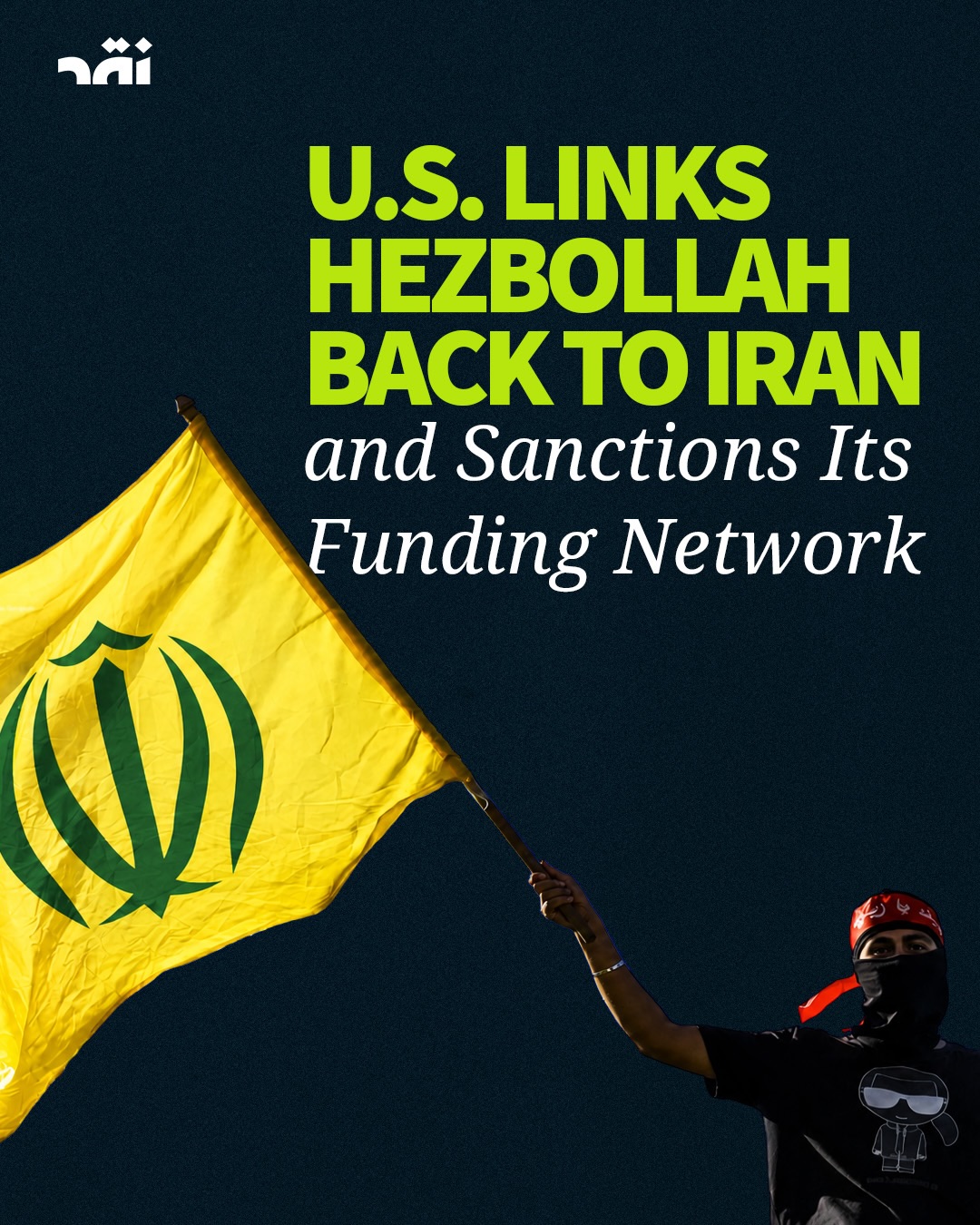
The United States has reclassified Hezbollah on the basis that it is subordinate to Iran, after the U.S. Treasury determined that the group is owned or controlled by, directed by, or acts for or on behalf of the Quds Force of Iran’s Islamic Revolutionary Guard Corps (IRGC-QF). The new designation is based on the Quds Force’s coordination of Hezbollah attacks and its deep involvement in directing the group’s political decision-making. This basis is now added to Hezbollah’s longstanding U.S. designation as a Foreign Terrorist Organization, in place since 1997.
At the same time, the Treasury imposed sanctions on 10 individuals involved in a money-transfer network, led by Turkish businessman Yunus Alper Yilmaz, alongside Khalil Ibrahim Kajmaz, Onder Dede, Vasfi Akyuz, Mehmet Akyuz, Mehmet Agur, Feyyaz Karasaleh, Mesut Musafer, Gulay Kaya Savci, and Emrah Ayaz. The network used couriers traveling on commercial flights between Lebanon, Turkey, the UAE, and Iran to transfer as much as hundreds of millions of dollars to Hezbollah outside the formal financial system.
The move goes beyond simply adding new names to the sanctions list. It gives Washington a more direct legal basis for dealing with Hezbollah as an extension operating under the direction of Iran’s Quds Force, while simultaneously targeting the financial network linking the group to Tehran. The sanctions also open the door to secondary measures against foreign financial institutions that facilitate significant transactions for the designated individuals.
The new designation also raises a question that goes beyond financial sanctions: If Hezbollah is now regarded, under the U.S. approach, as subordinate to Iran and operating under the direction of the Quds Force, could Washington eventually treat the group as part of a direct confrontation with Iran — including militarily?