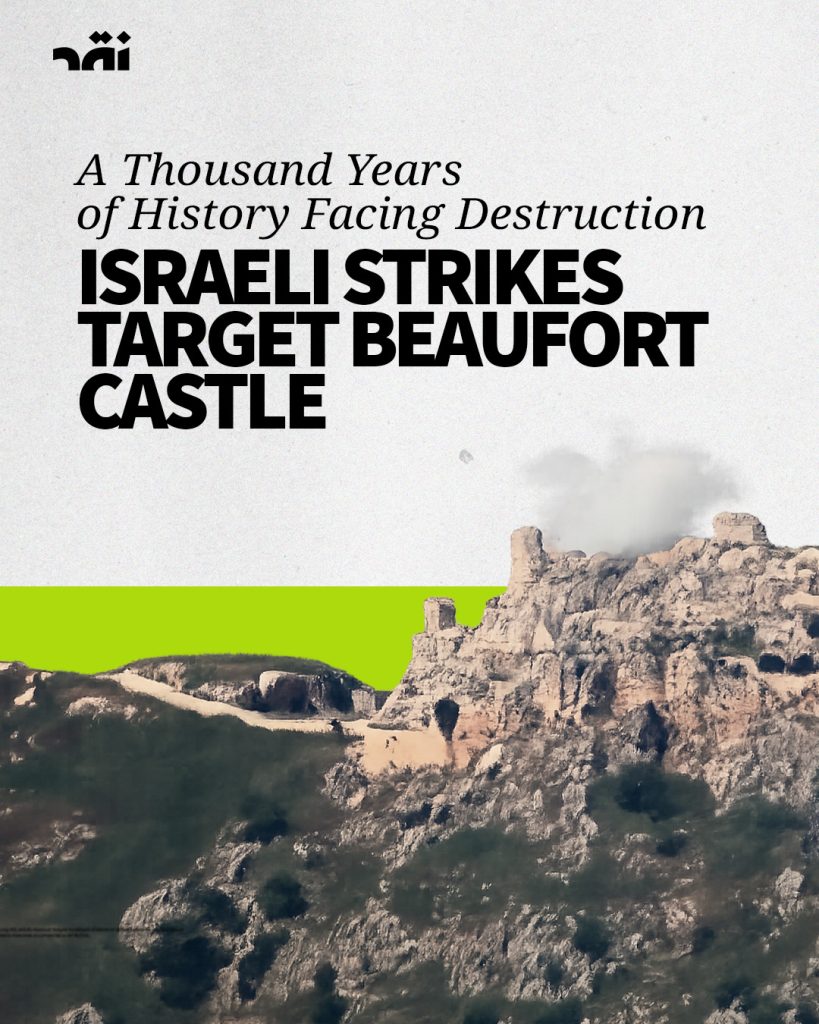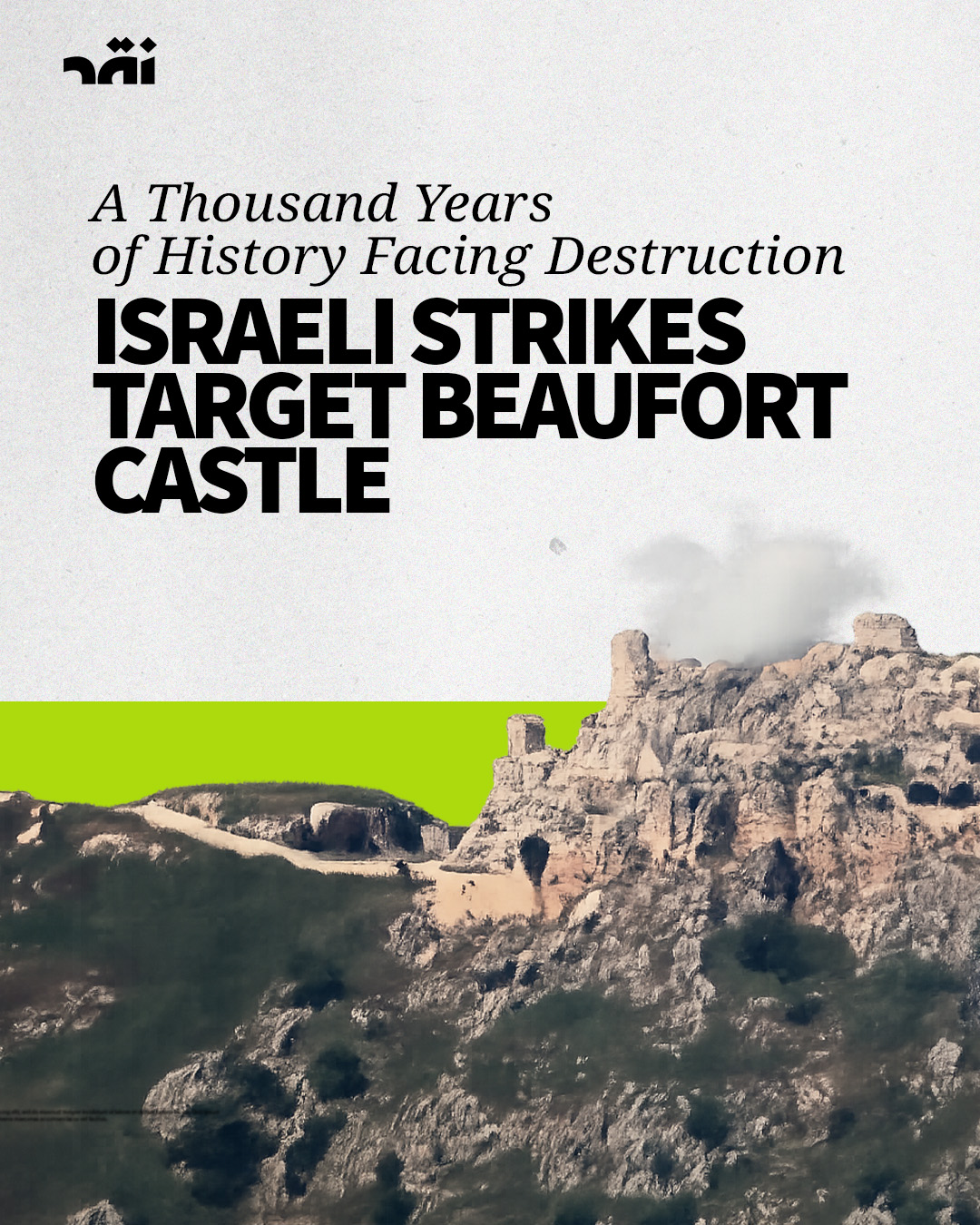

Israeli strikes did not distinguish between one structure and another. Among the sites hit was #BeaufortCastle in southern #Lebanon, one of the country’s most significant historical and cultural landmarks. Dating back to before 1125, the castle holds considerable national, cultural, and human heritage value.
In 2024, the site was granted Enhanced Protection status under the Second Protocol to the Hague Convention for the Protection of Cultural Property in the Event of Armed Conflict. According to the relevant authorities, targeting the castle constitutes a clear violation of international laws and conventions aimed at protecting cultural and human heritage.
Lebanon’s Ministry of Culture and international organizations concerned with world heritage have called for immediate action to halt the attacks and protect the site from further damage, describing what is taking place as a “war crime” and a form of “systematic cultural destruction” targeting the heritage and identity of southern Lebanon.
Historical sources indicate that the castle’s origins date back to the Roman era. It was later expanded by the Crusaders in the 12th century and subsequently restored by Emir Fakhr al-Din II. Over the centuries, the fortress witnessed successive conflicts, from the Crusader period to the Israeli invasion of Lebanon in 1982, when it became one of the fiercest battlegrounds between the Israeli military and Palestinian fighters in what became known as the Battle of Beaufort.
During #Israel ’s occupation of southern Lebanon, the castle was used as a military outpost and suffered extensive damage from shelling, airstrikes, and military fortifications. Restoration efforts began after Israel’s withdrawal in 2000 with Lebanese and Arab support, allowing the site to regain its status as one of the most important cultural and tourist landmarks in southern Lebanon.