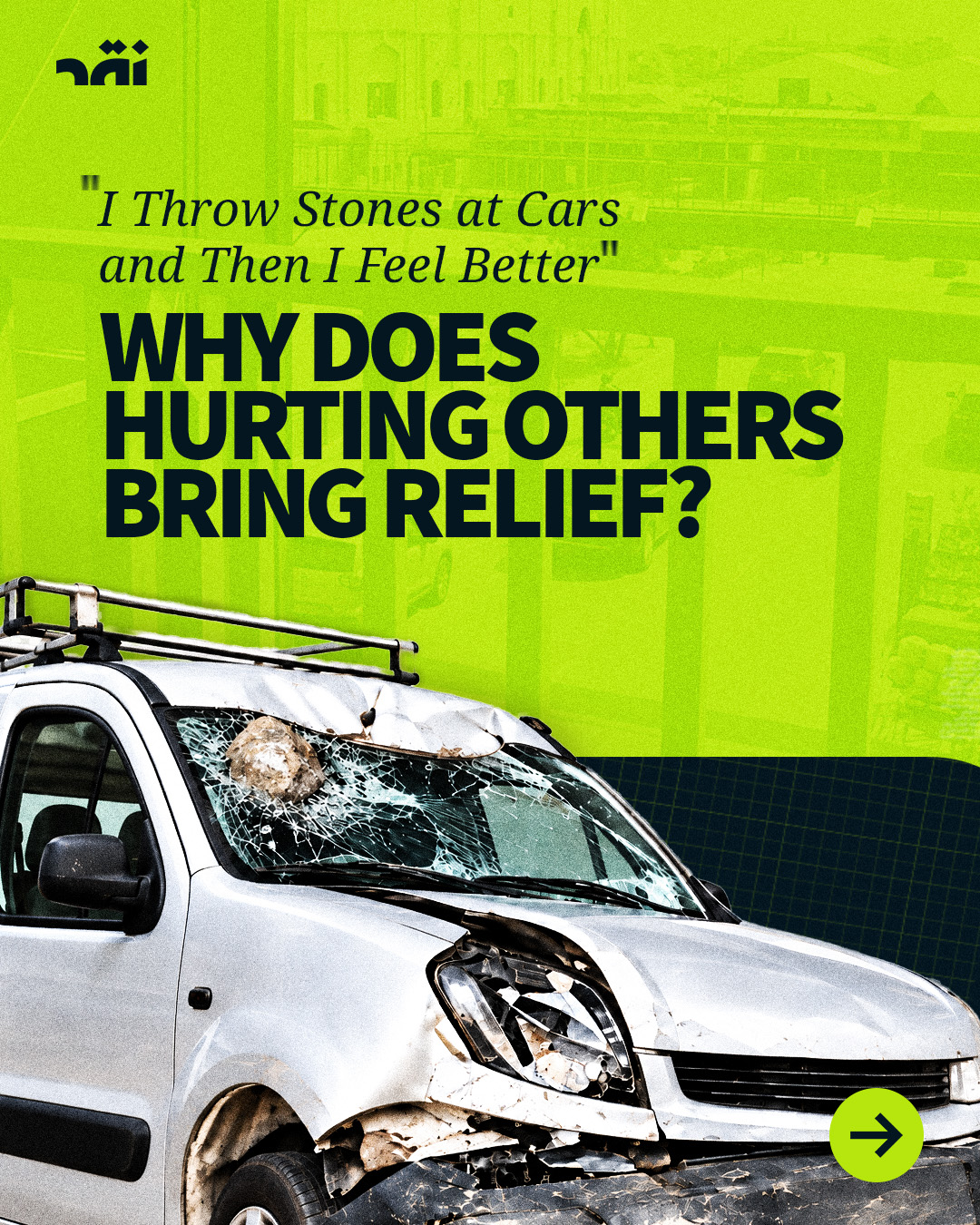
“I throw stones at cars and then i feel better” why does hurting others bring relief?
Like this post

24 Sep 2026
“I used to throw stones at cars whenever I felt pain or stress, and I would feel relieved afterward.” This is how the suspect explained his actions after his arrest.
Mohammad Hamza was killed by a stone thrown at his car near Beirut’s Sports City. Nine days later, according to the Internal Security Forces, the suspect returned and threw a stone at another vehicle.
It is an act that takes only seconds, yet leaves a stranger on the other side facing possible injury or death. It also raises a harder question: what drives someone to harm a person they have never even met?
In his statement, the suspect said he would throw stones whenever he felt distressed or tense, and that doing so made him feel better afterward.
This is where a cycle of repetition can begin: he feels tense, he throws a stone, then he calms down. Over time, a person may learn to return to the same behavior whenever they want relief from what they are feeling, until harming others becomes the quickest path to that relief.
In the moment the stone is thrown, releasing the tension can feel more immediate than thinking about what that stone might do seconds later. The impulse may pass quickly for him, while the consequences continue inside the car that was hit. By the time he walks away, he may have released his anger, while someone else is only beginning to deal with its consequences.
The fact that this behavior resulted in a death and was then repeated makes addressing it necessary even during imprisonment.
Removing the suspect from the street protects others while he is in custody, but psychological assessment and follow-up can help identify what drives the behavior and work on controlling it, so that the sentence does not end while the causes behind the harm remain unchanged.