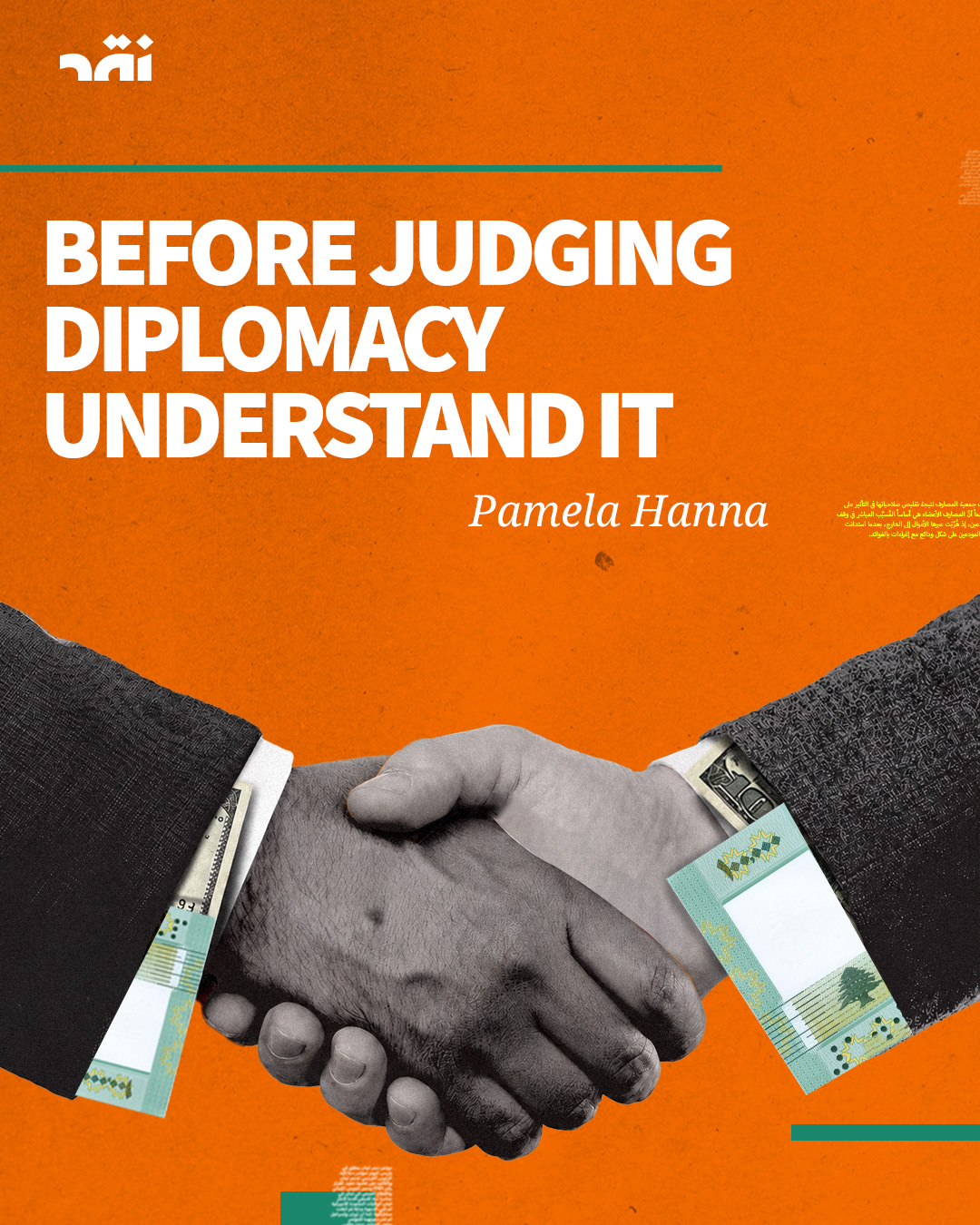

Diplomats no longer Have time to breathe. Every day, the world wakes up to a new crisis, a new negotiation, a new alliance, or a new conflict that demands immediate attention. Whether it is a ceasefire, a trade agreement, humanitarian aid, border security, or regional stability, diplomacy is constantly shaping the decisions that influence millions of lives. Yet, despite living in a time when diplomacy is more important than ever, it is also one of the world’s most misunderstood professions.
As Lebanese citizens, we are witnessing a period where diplomacy directly affects our future. Lebanon stands at the center of regional developments, economic challenges, security concerns, and international partnerships. Every statement issued by a government, every international visit, every mediation effort, and every negotiation has the potential to influence our country’s stability and future. It is therefore easy to judge diplomatic decisions by looking only at their outcomes. But before asking whether a negotiation succeeded or failed, perhaps we should ask a simpler question: What is diplomacy, and what is a diplomat actually trying to achieve?
Understanding diplomacy does not mean agreeing with every political decision. It means understanding the process before judging the outcome. An informed society is better equipped to evaluate decisions objectively rather than emotionally, especially during times of uncertainty. This is why I believe every Lebanese citizen should have a basic understanding of diplomacy; not to become diplomats themselves, but to better understand the world around them.
At its core, diplomacy is the process through which states and other legitimate international actors communicate, exchange information, represent interests, and negotiate in pursuit of peace, stability, cooperation, and national objectives. These actors are not limited to presidents or ministers. They include governments, international organizations, political representatives, religious authorities, and other officially recognized leaders who represent the interests of a nation, community, or movement. Each of these actors contributes a different perspective that helps decision-makers understand the broader picture. If an important stakeholder is excluded from the conversation, diplomacy becomes less representative, and the quality of decisions may suffer.
Diplomacy is often associated with negotiation, but negotiation is only one part of a much larger process. Before two parties negotiate, they must first communicate, exchange information, understand one another, identify their priorities, and determine what is negotiable and what is not. A skilled diplomat spends far more time listening and analyzing than speaking. This is because successful diplomacy begins with understanding before persuasion.
One of the first responsibilities of a diplomat is to fully understand the interests of the group they represent. Every nation, organization, or community has strategic priorities, cultural values, historical experiences, and what negotiators call “red lines”; positions that cannot be compromised. However, understanding your own position is only half the job. Equally important is understanding the interests, concerns, history, and culture of the other party. A diplomat does not need to agree with another perspective to understand it. In fact, understanding opposing viewpoints is what allows meaningful dialogue to take place.
This raises an important question: if diplomacy is based on communication, why do so many negotiations happen behind closed doors?
The answer lies in the difference between transparency and strategic confidentiality. Transparency is essential for maintaining public trust and democratic accountability. At the same time, diplomacy often requires confidential discussions that allow negotiators to explore options, test ideas, and make compromises without external pressure. Not every conversation can take place in front of cameras, and not every proposal should become public before negotiations are complete. The information citizens eventually receive is often carefully timed and intentionally communicated to support broader diplomatic objectives. This does not necessarily mean information is being hidden for harmful reasons; rather, it reflects the reality that diplomacy often requires discretion to succeed.
Another common misconception is that diplomacy is about defeating the other side or leaving the negotiating table as the winner. In reality, diplomacy is rarely a zero-sum game. The objective is not to make another party lose, but to protect your own interests while finding enough common ground to move forward. Sometimes achieving only one small objective may appear insignificant in the short term, yet it can create opportunities for greater progress in the future. Diplomacy is not measured only by immediate victories but by the long-term relationships and stability it helps create.
Perhaps this is why trust remains the foundation of diplomacy. Agreements can be signed, meetings can be organized, and negotiations can continue, but without trust, every proposal becomes questionable and every commitment becomes uncertain. Trust does not require complete transparency, nor does it eliminate disagreements. Instead, it creates confidence that communication remains credible and that dialogue will continue even during periods of conflict. A skilled diplomat knows how to build that confidence through consistency, professionalism, respect, and credibility.
Trust is strengthened through both formal and informal diplomacy. Formal diplomacy takes place during official meetings, negotiations, conferences, and international organizations. Informal diplomacy develops through personal relationships, cultural exchanges, and conversations outside official settings. These informal interactions often become the foundation upon which formal agreements are built. After all, people are generally more willing to cooperate with those they know, understand, and respect.
Diplomacy itself has also changed dramatically over the past two decades. Globalization and digital communication have transformed the profession. News now spreads within seconds through television, social media, satellite technology, and citizen journalism. Public opinion evolves in real time, and international events are scrutinized by audiences around the world almost instantly. Diplomats are no longer responsible only for communicating with foreign governments. Today, they must also engage with international organizations, respond to media narratives, communicate with their own citizens, and adapt to rapidly changing global developments. The profession has become faster, more complex, and more demanding than ever before.
For countries such as Lebanon, this changing environment presents both challenges and opportunities. Our country exists within one of the world’s most dynamic geopolitical regions, where regional developments can quickly influence our economy, security, and international relationships. Regardless of political opinions, diplomacy remains one of the most important tools available to protect national interests, reduce tensions, strengthen partnerships, and create opportunities for future cooperation. Every successful negotiation begins with understanding the interests of all parties involved, identifying common ground, and building enough trust to keep communication alive.
This is why diplomacy should never be viewed as a sign of weakness. On the contrary, it is one of the strongest instruments a nation possesses. It requires patience, preparation, cultural intelligence, strategic communication, emotional discipline, and the ability to think beyond today’s headlines. It asks difficult questions before offering easy answers, and it recognizes that lasting solutions are rarely achieved overnight.
So, before we judge the next diplomatic meeting, the next negotiation, or the next international agreement involving Lebanon, perhaps we should first understand the profession itself. Diplomacy is not about surrendering interests or avoiding difficult conversations. It is about protecting national interests through communication before conflict, understanding before persuasion, and trust before agreement.
In a world that never stops communicating, diplomats truly no longer have time to breathe. Yet their ability to listen, negotiate, and build relationships may be one of the most valuable tools any nation has for shaping a more stable future.