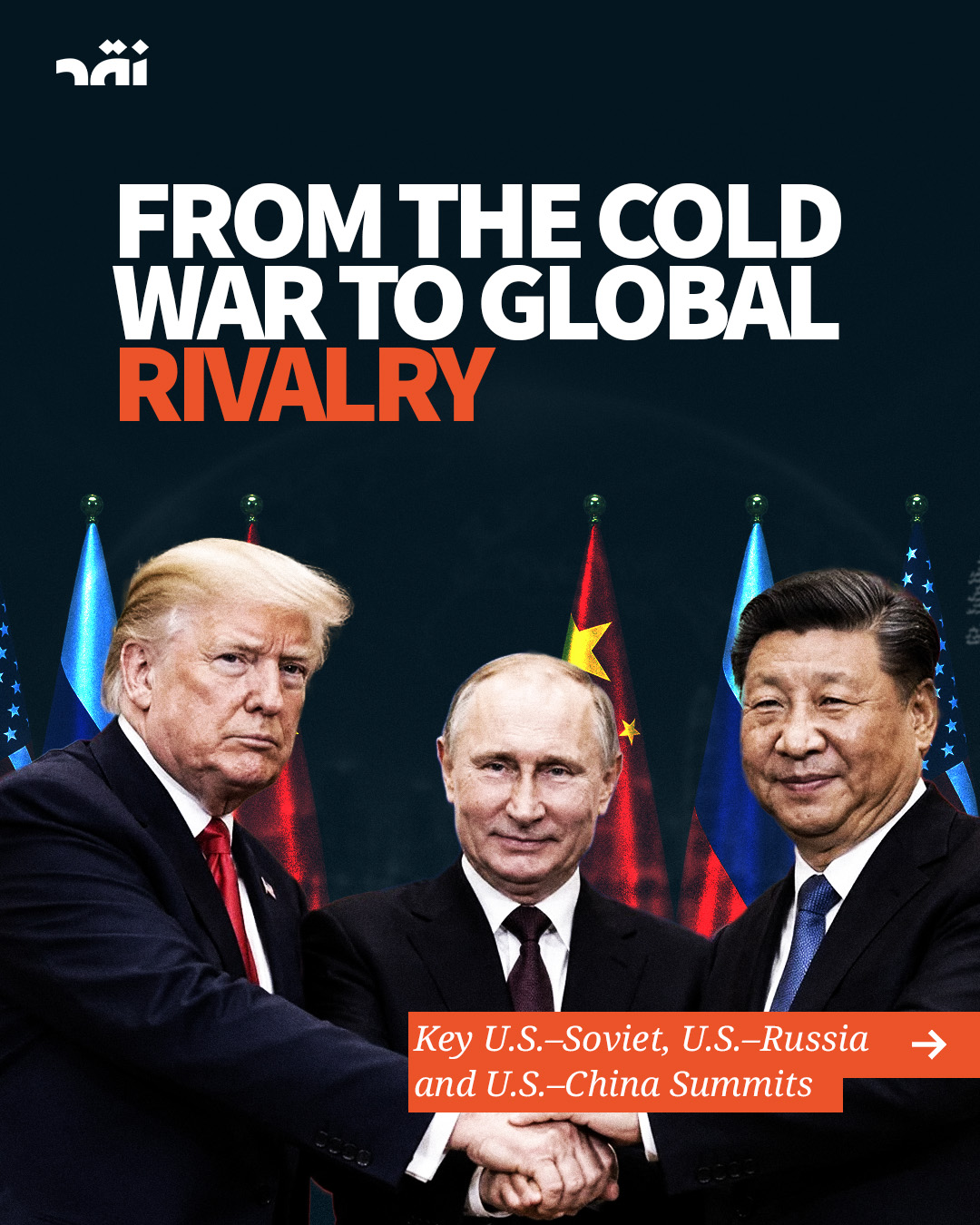

Thursday’s summit between Trump, Putin and Xi in Shenzhen puts decades of diplomacy back in focus. Here’s what seven major summits achieved.
– Nixon and Mao | Beijing, Feb. 21, 1972
Nixon’s visit produced the Shanghai Communiqué and paved the way for formal U.S.–China ties.
– Reagan and Gorbachev | Washington, Dec. 8, 1987
The leaders signed the INF Treaty, which led to the destruction of 2,692 U.S. and Soviet missiles by 1991.
– Bush and Gorbachev | Malta, Dec. 2–3, 1989
The talks on Europe’s future became a symbol of the Cold War’s end. No formal agreement was signed.
– Obama and Medvedev | Prague, April 8, 2010
New START capped each country’s deployed strategic nuclear warheads at 1,550. The treaty expired in February 2026.
– Biden and Xi | California, Nov. 15, 2023
The two sides agreed to resume military talks and cooperate to curb trafficking in chemicals used to make fentanyl.
– Trump and Xi | Busan, Oct. 30, 2025
The leaders struck a temporary trade truce that lowered some tariffs and delayed trade measures.
– Trump, Putin and Xi | Shenzhen, Nov. 19, 2026
The leaders issued a joint declaration on reducing nuclear risks and reforming the UN.
The summit yielded no binding deals on arms cuts or ending conflicts.