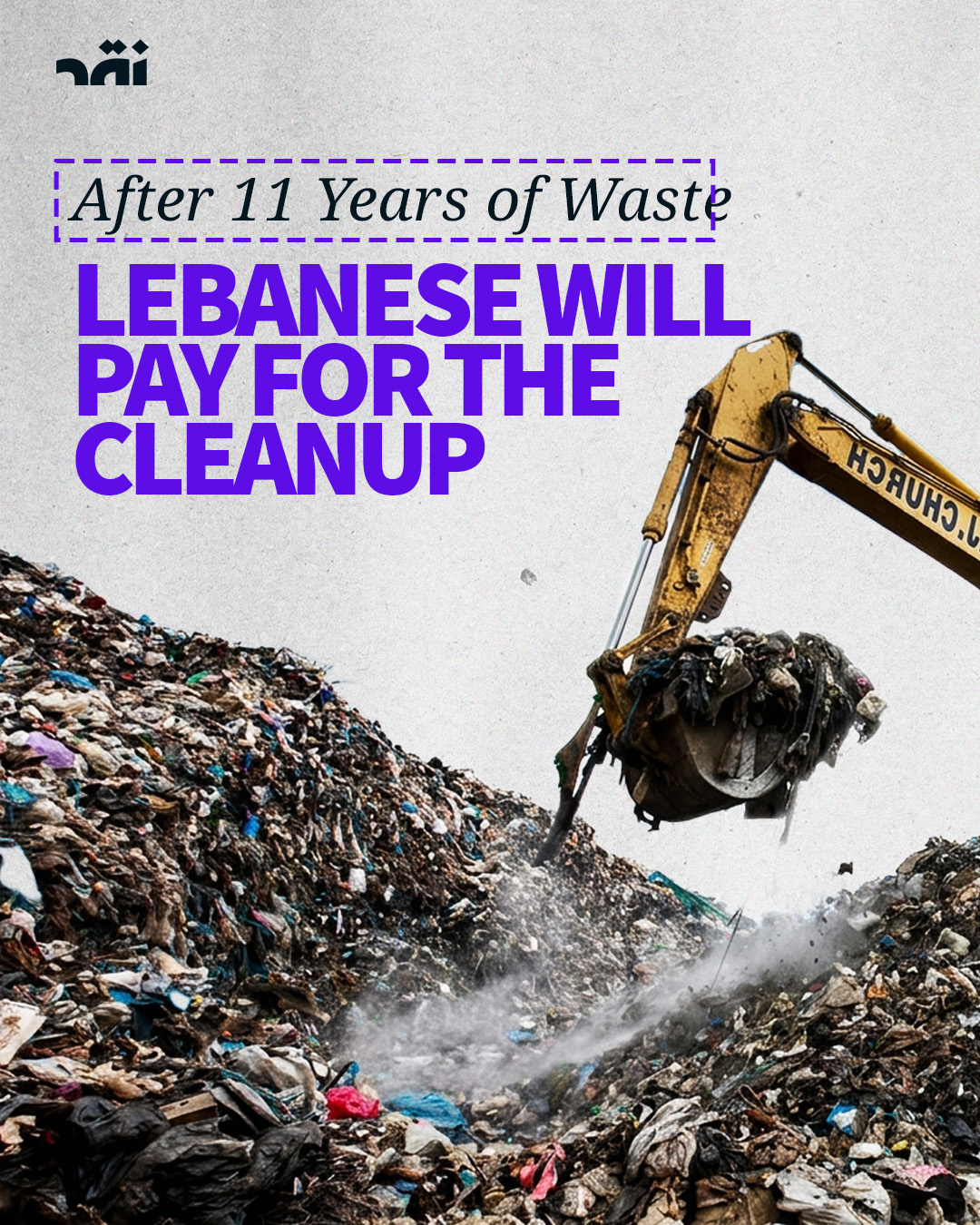
After 11 years of waste Lebanese will pay for the cleanup
Like this post

26 Aug 2026
Lebanon’s environmental levy on waste has officially taken effect, giving the state a steady source of funding for waste management after years of temporary solutions. The levy ranges from 1% to 3% on certain imported goods and is expected to generate $7–9 million per month for waste collection and treatment.
The measure comes 11 years after the 2015 waste crisis, during which Lebanon relied on landfills, contracts, and emergency fixes while the sector accumulated around $560 million in debt. The new plan includes a National Waste Management Authority and divides Lebanon into 17 service zones, each with its own system for collection, transport, sorting, treatment, and disposal.
But the cost will once again fall on citizens. Since the levy applies to imports, it is expected to raise consumer prices, meaning Lebanese households will help finance the reform of a sector whose repeated failures they have already paid for.
After 11 years of failure, the state has finally found a way to fund a solution. As for where the money will come from, no new plan was needed: the Lebanese who paid for the waste crisis will now also pay to get out of it.