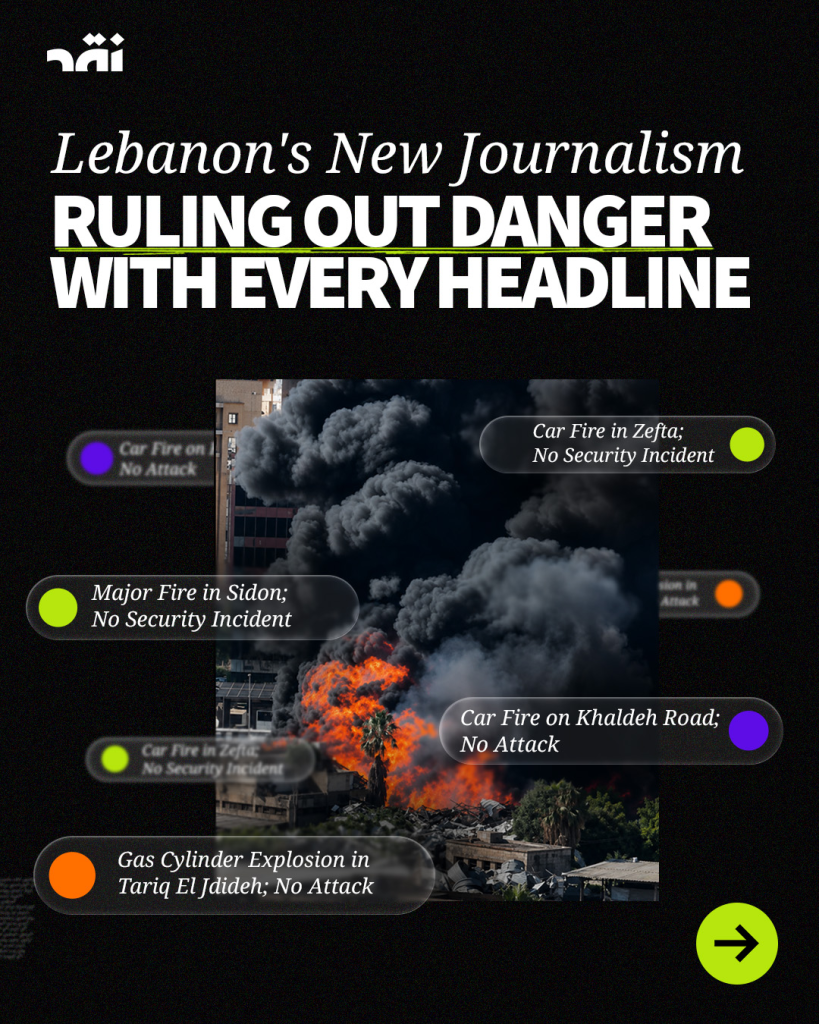
Lebanon’s new journalism ruling out danger with every headline
Like this post

24 Jun 2026
War does not only change reality; it changes the way we perceive it.
Wars do not merely destroy buildings and infrastructure. They also reshape the way people think and how they view the world around them.
After years of living through breaking news alerts, constant anxiety, and the sound of airstrikes and explosions, fear becomes part of everyday life. The mind gradually shifts into a permanent state of hypervigilance.
That is why the sound of a tire bursting, a building fire, or passing ambulances is no longer perceived as ordinary. For many Lebanese, the first instinct is to assume an Israeli airstrike or a serious security incident has occurred.
This also explains the shift in the way media outlets and breaking news platforms report events.
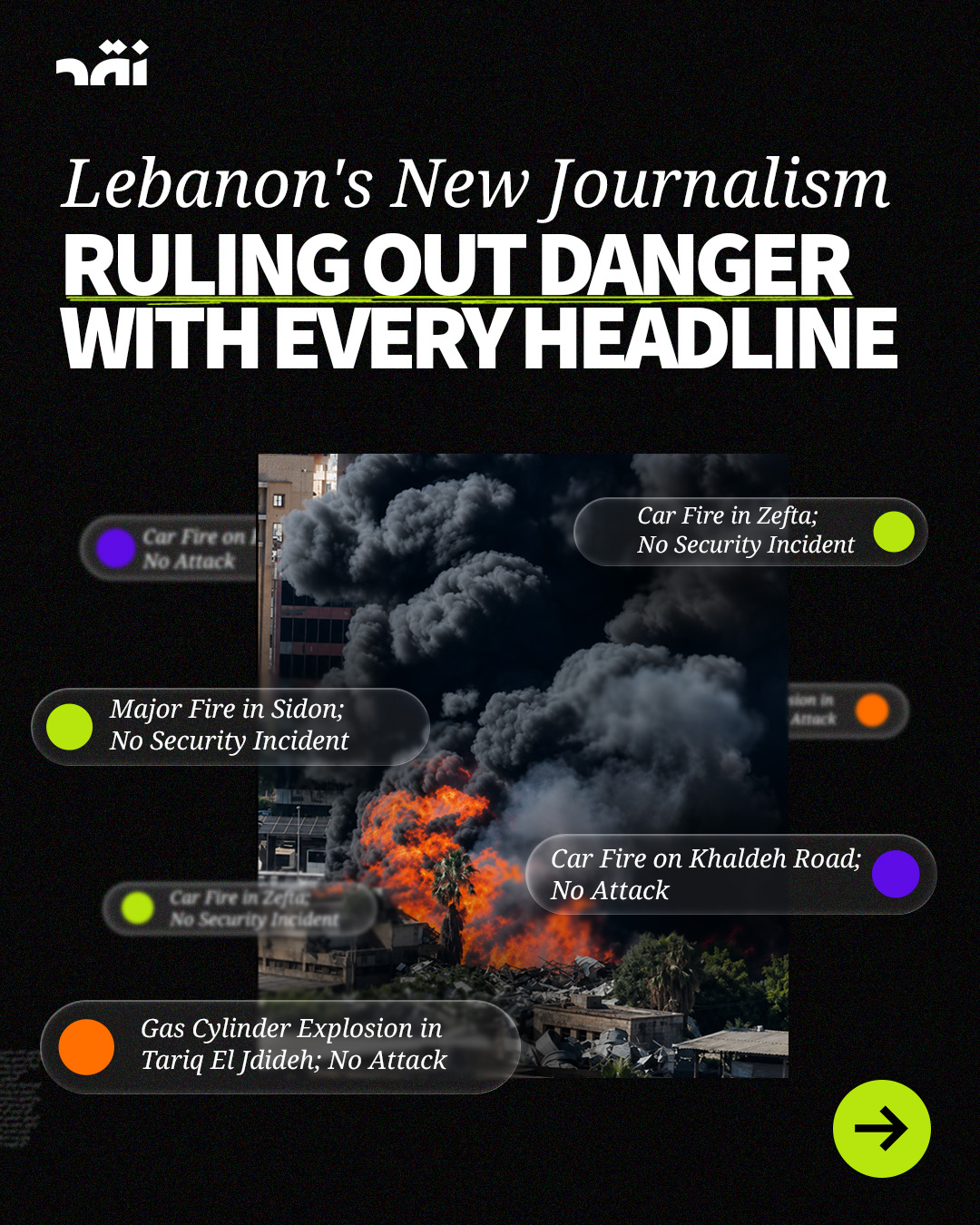
Where a fire or traffic accident would once have been reported on its own, headlines now read: “Fire reported in [area], with no sign of an attack,” or “Gas cylinder explosion, not a security incident.” Ruling out a security threat has become an essential part of the news itself.
War does not only change reality; it changes the way we interpret it. Events that once seemed ordinary in times of peace are now viewed through the lens of war, fear, and a collective memory shaped by years of anxiety.
Its effects extend far beyond physical destruction. They reach deep into people themselves, changing their habits, expectations, and even the way they react to an ordinary sound in the street.
Perhaps the most dangerous consequence of war is that it conditions us to live in a constant state of alert—until even an ordinary news story must first reassure us that it is, in fact, just an ordinary news story.