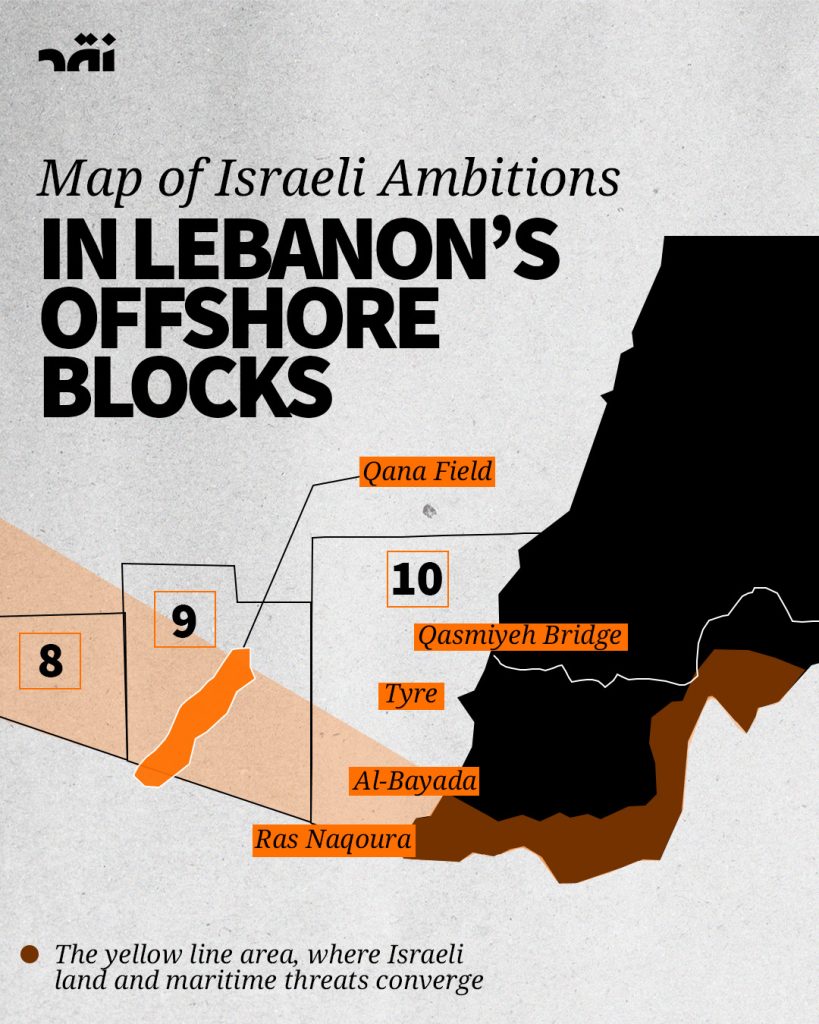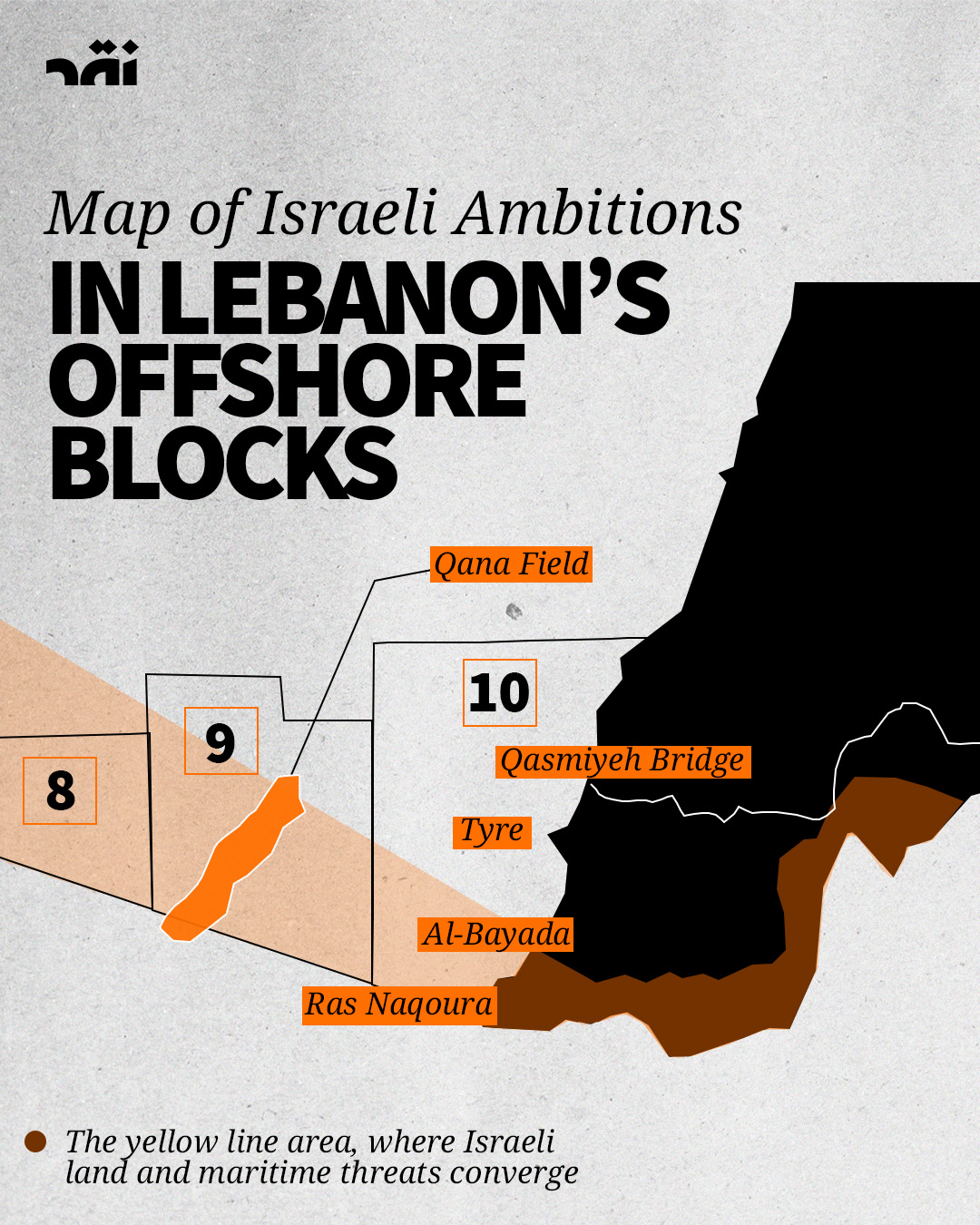

Aside from the 55 southern villages included within the Israeli “yellow line” on land, this line has also extended to encompass Lebanese offshore oil blocks within the maritime economic zone located between the coasts of Al-Bayada and Ras Naqoura. This means that, in addition to the security threat imposed in the south, Israel has also established a continuous threat to Lebanon’s oil rights—particularly in offshore blocks 8, 9, and 10, where the Qana field is located.
The inclusion of the maritime zone within the “yellow line” reflects an Israeli intention to control the share of oil allocated to the Lebanese state under the 2022 agreement. This intention is not new. Since 2024, Israel’s Minister of Energy has raised claims of loopholes in the maritime border agreement between Lebanon and Israel, calling for its cancellation on the grounds that it is unfair to Israel. However, the agreement has not been officially revoked by Israel to date, meaning it remains in force.
Accordingly, any Israeli activity within the maritime economic zone constitutes a violation of Lebanese sovereignty.
At the same time, prevailing assessments suggest that the maritime demarcation agreement will remain intact, particularly in light of ongoing U.S. efforts to broker new understandings between Lebanon and Israel.
Israeli ambitions over Lebanese land and resources are not new. Today, with an entire southern region effectively isolated on land and control extending toward the sea, the key question remains the ability of the Lebanese state to reclaim its rights and prevent further violations—especially in the maritime domain.