
For thirty years, Lebanon was the architect of the “interval”—the precarious, curated space between explosions. We mastered the art of the placeholder: we built lives on top of fault lines, celebrated a “resilience” that was merely a synonym for exhaustion, and mistook the absence of gunfire for the presence of peace.
But as the horizon burns again, the illusion has shattered. We must finally admit that we were never at peace. We were living in what Johan Galtung called Negative Peace: a state defined merely by the absence of shelling, while the structural forces of war—corruption, impunity, and sectarianism—remained weaponized.
The 1990 Fallacy: A Peace of the Graveyard
The genesis of our ruin lies in the 1990 Taif Agreement. Marketed as reconciliation, it was actually a surrender to a Cartel of Sects. The warlords traded their fatigues for suits, but the logic remained martial.
The cornerstone of this era was the 1991 General Amnesty Law. By granting a blanket pardon for civil war atrocities, the state mandated amnesia. We did not heal the wounds; we simply put a suit over them. This legalized impunity ensured that the men who destroyed the country were the only ones allowed to “rebuild” it. We built a republic on top of unidentified mass graves, pretending that if we didn’t speak of the ghosts, they wouldn’t haunt us.
The “Fake Peace” Economy
To keep a traumatized population from questioning this lack of reform, the ruling class bought our silence. This was achieved through an artificial prosperity fueled by a national Ponzi scheme.
For decades, we lived on a lifestyle we hadn’t earned—cheap imports and a stable exchange rate—while our productive sectors were left to rot. This wasn’t growth; it was a bribe. As long as the Lira was stable, we were discouraged from demanding accountability for the lack of electricity or the systemic theft of public funds. We were decorating a house that had no foundation, paying interest on a “stability” that was actually a slow-motion robbery of our future.
The Ticking Clock of Structural Violence
In a Negative Peace, violence doesn’t disappear; it becomes structural. In Lebanon, this manifested as Consociational Paralysis. Because every decision required sectarian consensus, the state became incapable of performing basic duties.
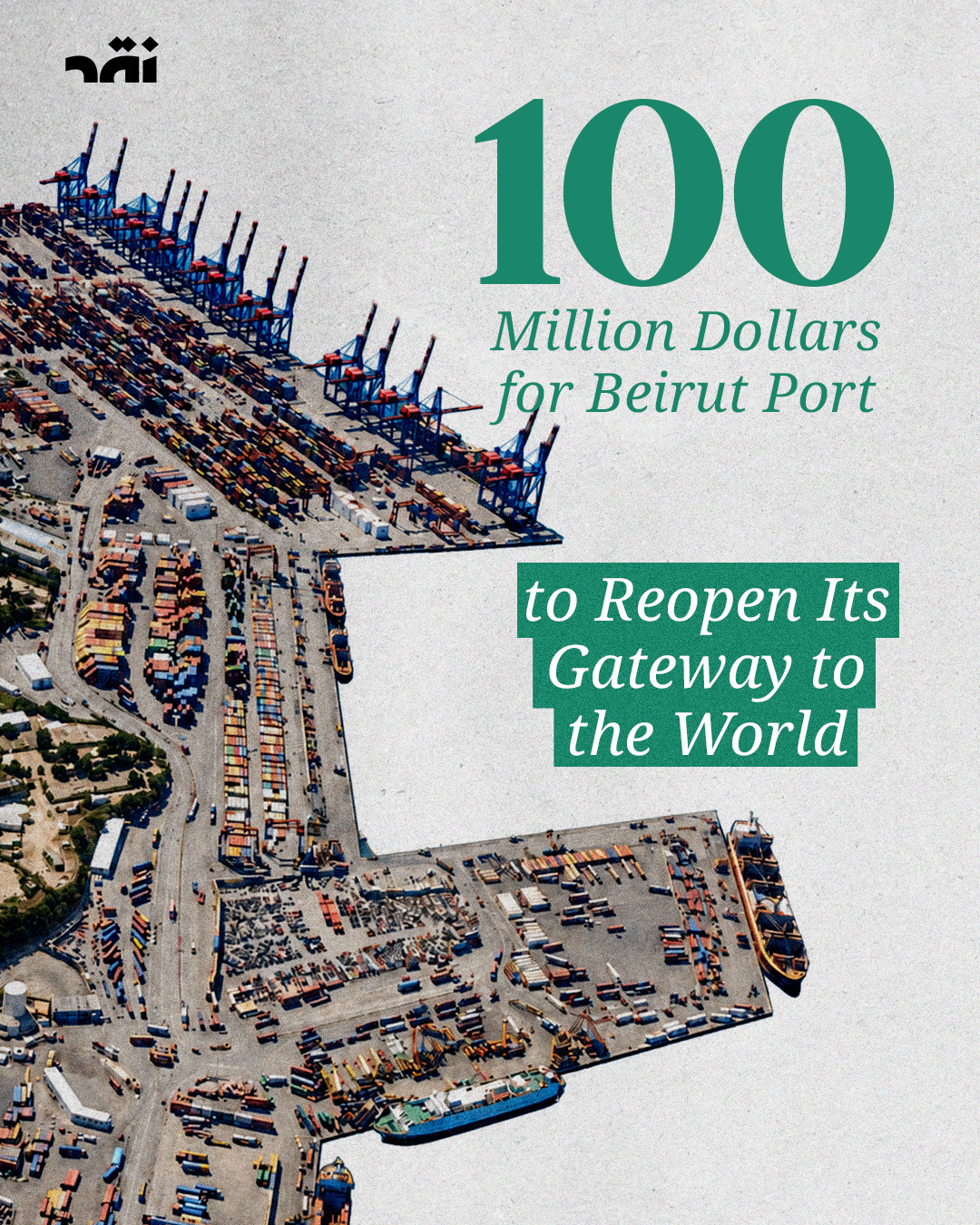
We saw this in the “Waste Crisis” of 2015 and, most lethally, in the 2020 Beirut Port Explosion. Those 2,750 tons of ammonium nitrate sat in the heart of our city not because of a clerical error, but because the system was designed to prevent responsibility. In a “consensus” government, everyone is in charge, which means no one is accountable. The explosion was the ultimate proof: the absence of war is not the same as safety.
The Radical Shift: Building Positive Peace
We are currently being pressured to look for another “reset”—another stopgap ceasefire that returns us to the status quo. We must refuse. The “Old Normal” is what brought us here.
The only way forward is Positive Peace. This isn’t a poetic sentiment; it’s a structural mandate. It is the active presence of the 8 Pillars of Positive Peace. To build them, we must move from a “deal between leaders” to a “covenant between citizens”.
- The Institutional Cure (Government, Corruption, & Information)
We must reclaim the state from the cartel. A Well-Functioning Government is one that provides rights—electricity, water, healthcare—rather than distributing favors. This requires an Independent Judiciary to achieve Low Levels of Corruption. When a judge can subpoena a warlord, “Negative Peace” ends and justice begins. This must be fueled by a Free Flow of Information, replacing sectarian propaganda with transparent data and a shared reality. - The Social Foundation (Rights, Capital, & Neighbors)
“Coexistence” is not enough; we need Solidarity. This requires the Acceptance of the Rights of Others through a Civil Personal Status Law, moving the individual out of the sectarian cage. By investing in Human Capital, we ensure our youth can build a future here. Finally, we must reclaim our sovereignty to ensure Good Relations with Neighbors, moving from a “mailbox” for regional wars to a sovereign nation that manages its own destiny. - The Economic Bedrock (Sound Business & Equitable Distribution)
We must pivot from a rentier trap to a Sound Business Environment that rewards innovation over nepotism. This must be coupled with an Equitable Distribution of Resources, ensuring that the peripheries of Lebanon are no longer left to rot while the elite hoards the nation’s wealth. Economic justice is the ultimate deterrent to the return of militias.
The Call to Courage
Building Positive Peace is terrifying because it requires us to dismantle the “protection” rackets we’ve lived under for thirty years. It requires the courage to trust a fellow citizen more than a sectarian patron.
We must stop being “resilient” and start being transformative. The “hollow silence” has been shattered, and we cannot afford to wait for the next countdown. We must speak of justice, accountability, and sovereignty not as foreign concepts, but as the only indigenous cure for our ruin.
Let us not waste this destruction. Let us refuse the “pause” and demand a foundation. Let us work together to build a peace that is finally, for the first time, real.