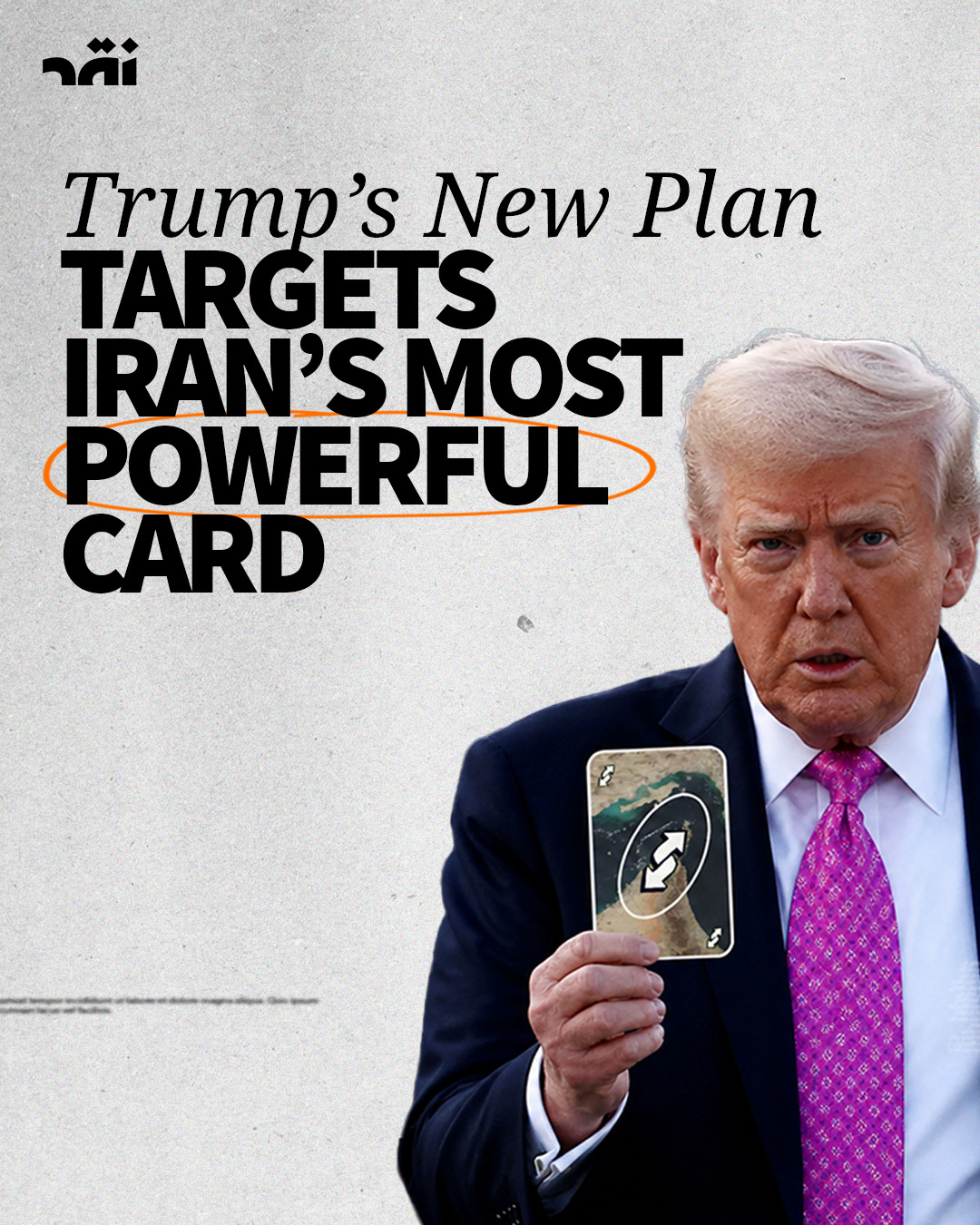

In the aftermath of the U.S.–Israeli strikes on Iran on February 28, Tehran escalated to the highest level by closing the Strait of Hormuz, activating its most powerful geopolitical lever and pushing the global economy into the heart of the confrontation.
The decision triggered an immediate surge in energy prices and disruptions to supply chains. After a temporary reopening on April 17, followed by a decisive closure the next day, Iran redrew the rules of maritime transit by enforcing passage within its territorial waters, while simultaneously mining parts of the parallel route in Omani territorial waters. This shift moved control over navigation from the principle of freedom of passage to Iranian sovereign decision-making.
In response, U.S. President Donald Trump proposed a counter-approach built on two clear pillars.
The first is a comprehensive naval blockade targeting vessels coming from or heading to Iranian ports, aimed at choking oil flows and paralyzing maritime traffic linked to the strait—thereby stripping Iran of its ability to weaponize geography as a strategic pressure tool.
The second is the launch of “Freedom” on May 4, a large-scale military operation to reimpose freedom of navigation, involving the deployment of a multidimensional force of around 15,000 troops, hundreds of aircraft, and a number of naval assets, including the aircraft carrier USS Abraham Lincoln (CVN-72).
In this sense, the conflict extends beyond control of a maritime corridor and positions itself at the core of a battle of wills. The success of this approach would mean stripping the Islamic Republic of Iran of its strongest leverage and recalibrating the balance of power.
Conversely, if Tehran consolidates its control, the Strait of Hormuz would become an open global pressure tool—dictating the rhythm of the international economy and redefining the rules of engagement in one of the world’s most sensitive regions.