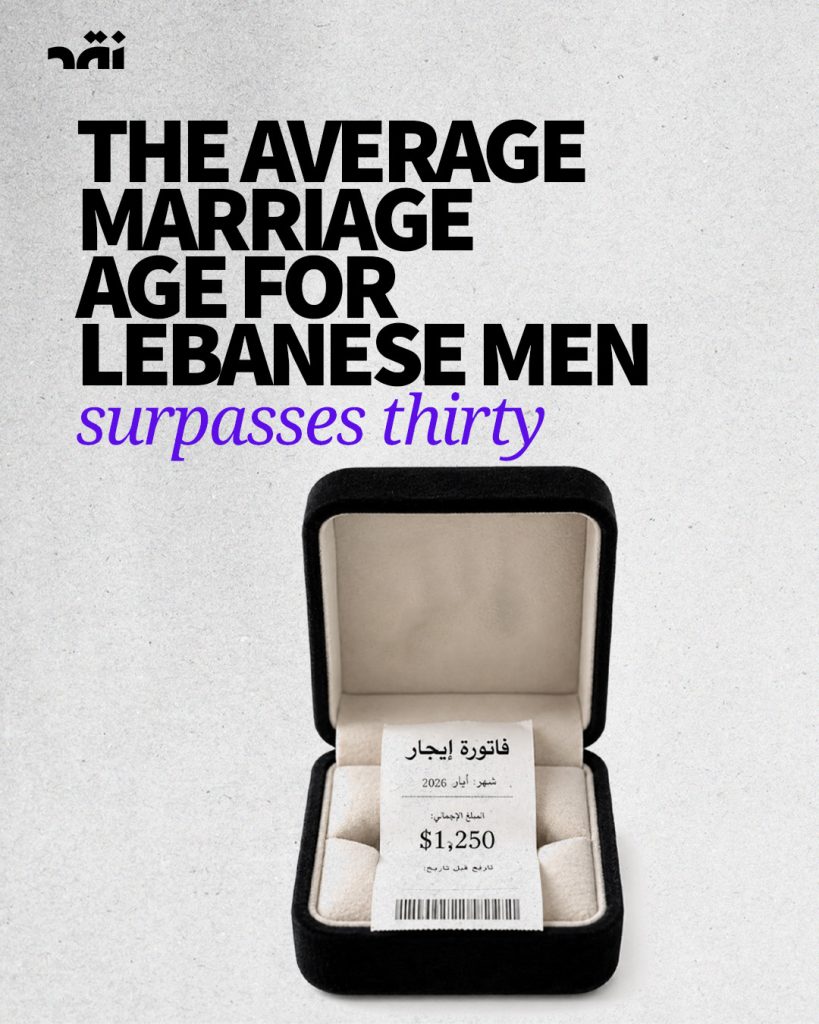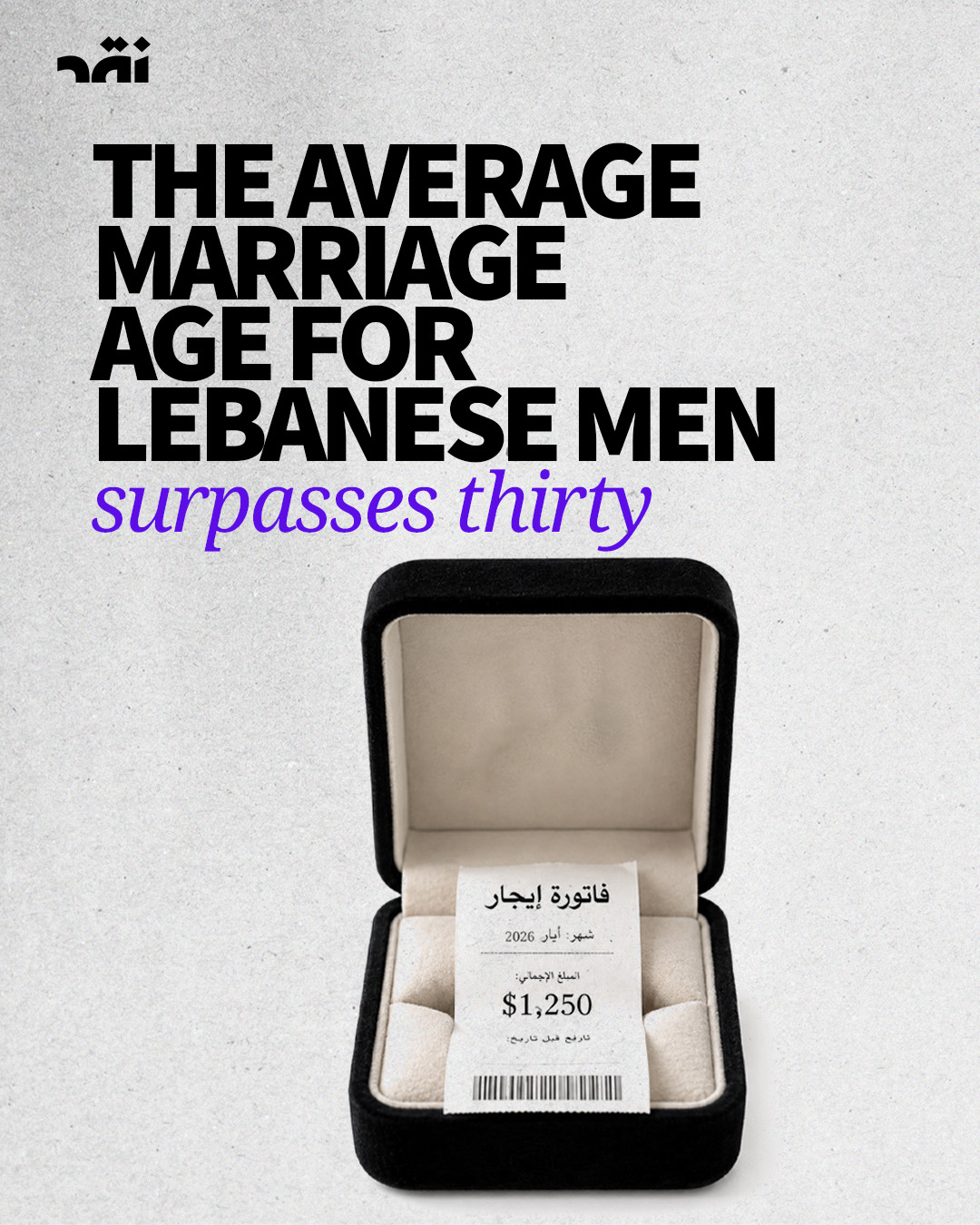
The Average Marriage Age for Lebanese Men Surpasses Thirty
Like this post

17 May 2026
The average age of marriage among Lebanese men has undergone a profound shift over the past decades. While marriage in the 1990s often took place in the mid-twenties, it now exceeds the age of 30 for a large proportion of men — a transformation that reflects not merely a passing social change, but a gradual collapse in the conditions necessary for stability in Lebanon.
For many young Lebanese men, marriage is no longer an emotional decision or a natural step associated with age. Instead, it has become a heavy financial burden and a major responsibility that requires economic capabilities now beyond the reach of most Lebanese people. Since the economic collapse that struck the country in 2019, wages have sharply declined while prices have risen at an unprecedented pace across nearly every sector, from housing and furniture to healthcare, education, and basic services.
Estimates indicate that around 70% of Lebanese men earn monthly salaries ranging between $400 and $700, at a time when the cost of marriage alone can exceed $20,000 to $30,000. As a result, starting a family has become, for many, less of a realistic possibility and more of a postponed project.
Yet the economic crisis alone does not fully explain this transformation. For years, Lebanon has been living in a constant state of political and security instability, leaving the future itself uncertain and suspended. In such an environment, planning a long-term life becomes deeply fragile, especially for a generation caught between fears of collapse, unemployment, emigration, and recurring security escalations.
Wars have also played a central role in reinforcing this reality. Every new confrontation or escalation deepens the sense of uncertainty, reproduces fears about the future, and pushes more young people to delay marriage while waiting for a stability that does not appear to be coming anytime soon.
As such, the rising age of marriage among Lebanese men is no longer merely a social detail, but a clear indicator of a country where the ability to build a stable and ordinary life is gradually eroding.