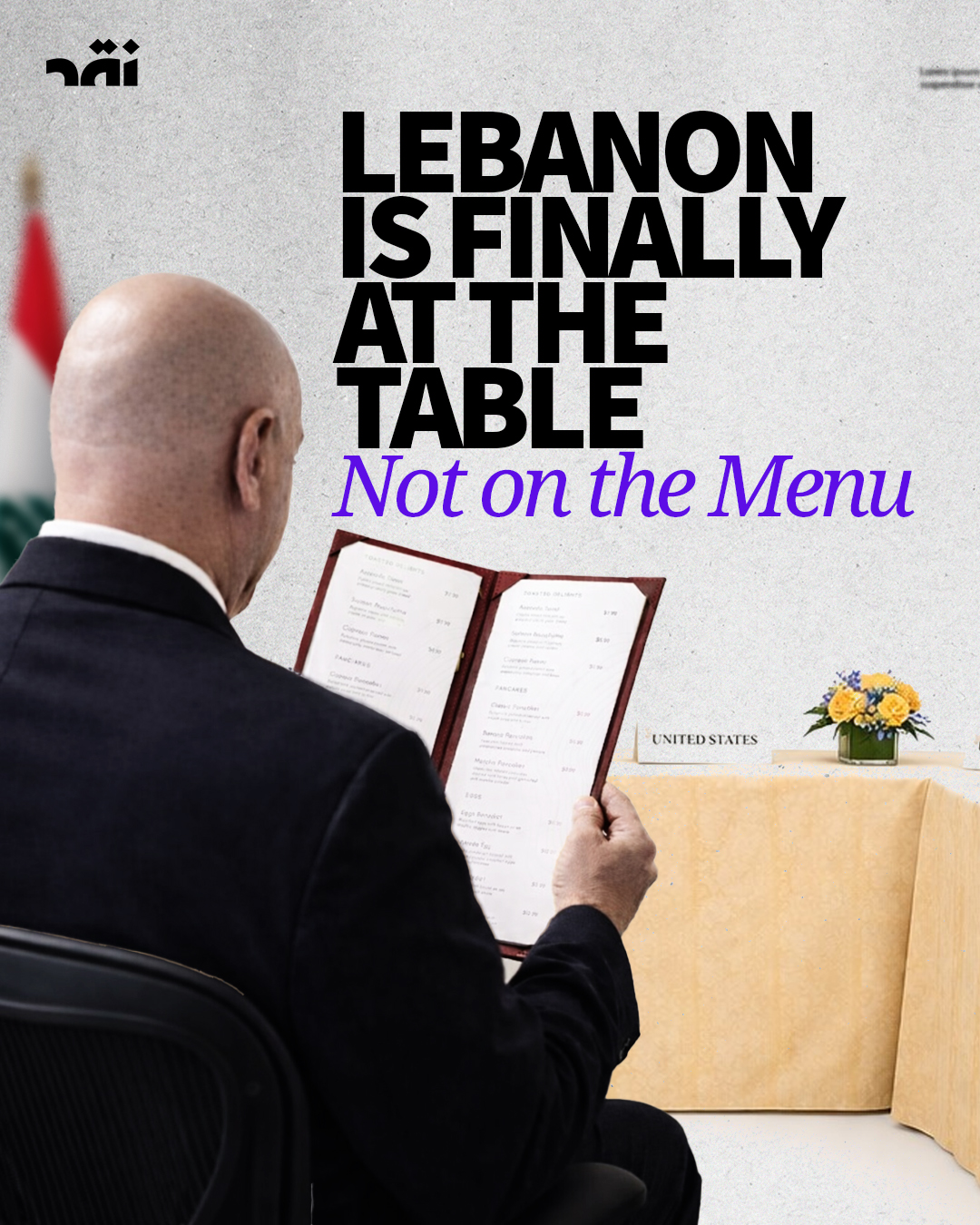

Yesterday marked a pivotal moment that broke a long-standing pattern of dependency and marginalization: for the first time, Lebanon sat at the same table with Israel in direct negotiations in Washington—not through a mediator speaking on its behalf, nor under the dictates of external actors, but through an official delegation representing the Lebanese state alone.
For the first time, others are not speaking for Lebanon—it is speaking for itself. Neither Iran nor France, nor any other party claiming guardianship or protection, is negotiating on its behalf. Lebanon is present as a sovereign state, negotiating solely in pursuit of its national interest.
More importantly, Lebanon is negotiating without the tutelage of Hezb neither in the formation of the delegation, nor in setting the agenda, nor in defining the political ceiling. For the first time, the state itself decides what it wants, free from imposed dictates. This alone is unprecedented, even if it does not immediately translate into tangible results.
Admittedly, the path ahead is far from easy—indeed, it is nearly impossible under the current balance of power. Lebanon lacks real leverage to bring to the negotiating table, most notably the issue of Hezb’s arms, which the state remains unable to resolve.
Yet despite this, the significance of the step should not be understated. Politics is not built solely on outcomes, but also on trajectories. What has happened marks the beginning of a different path—one in which the state attempts to disentangle itself from the reality of Hezbollah’s long-imposed dominance.
These negotiations may not succeed in ending the war. They may not even lead to a concrete ceasefire. But they may achieve the minimum: shielding civilians, protecting what remains of infrastructure, or even reinforcing the notion that Lebanon is no longer an open arena for Hezbollah.
In the end, Lebanese citizens may disagree on the negotiations and question their outcomes. But what matters most is that, now that negotiations have begun, they lead to a tangible result—one that brings an end to the killing, the destruction, and the war altogether.